Which container should you choose?
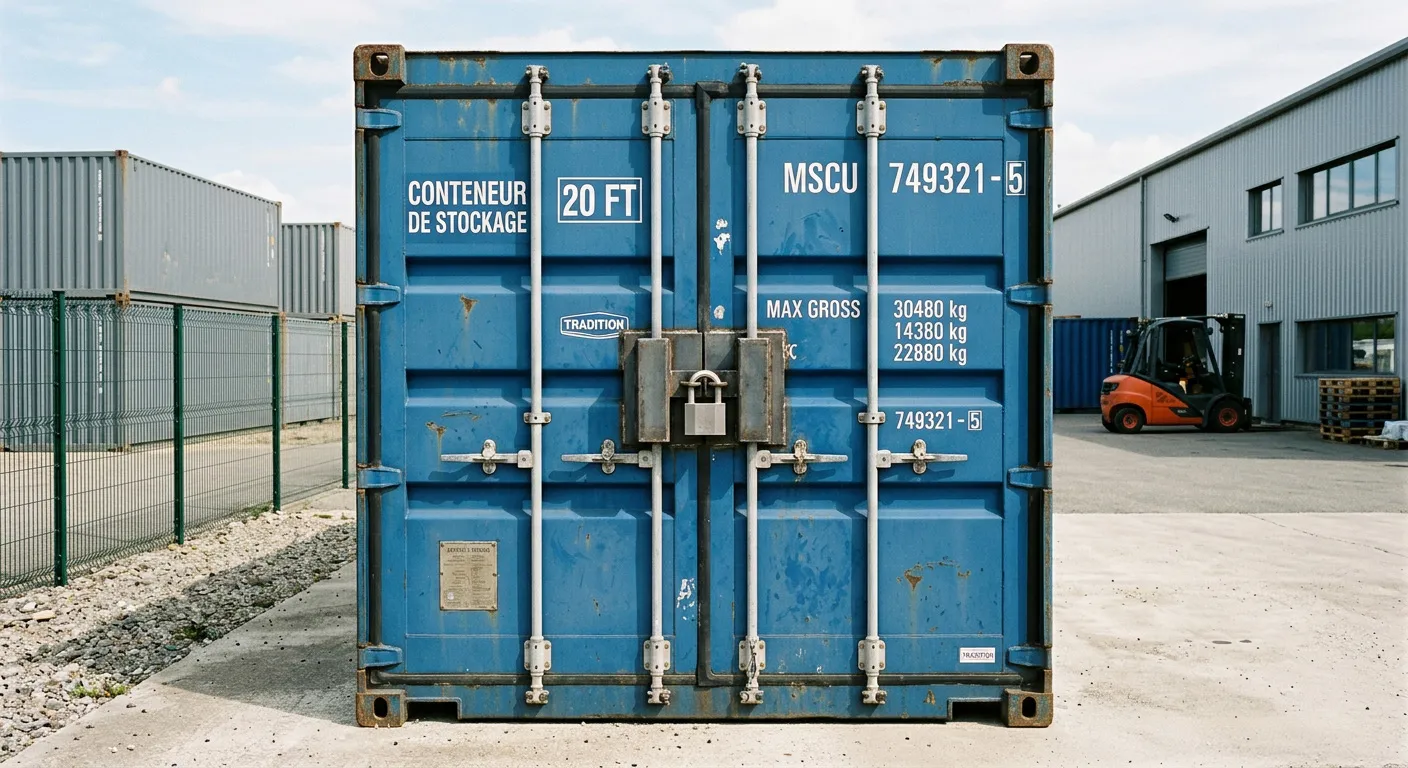
Choosing the right shipping container for storage isn’t just about size (20’ or 40’): security, ventilation, humidity control, and the type of lock are just as important for protecting your goods. A poorly chosen or improperly configured container can lead to condensation, mold, premature corrosion… or worse, theft. In this article, we’ll explore which shipping container to choose for dry and secure storage anywhere in Canada, covering four key factors: security, ventilation, humidity, and locks.
Security: a sturdy, securely locked storage container
Structurally speaking, a Corten steel shipping container designed for storage already offers excellent mechanical strength, especially if it is in good condition (straight walls, doors that close properly, no perforating corrosion). To secure the contents, choose a container with original doors in good condition, functional hinges, and complete locking bars, then add specific anti-theft devices.
The most effective accessory is still the lockbox (padlock protection case) welded or bolted onto the container doors, which covers the padlock almost entirely and makes it very difficult to access cutting tools. This type of steel case significantly increases the time required to break the padlock, which acts as a major deterrent against theft attempts. Combined with a high-quality monoblock padlock (hardened steel, drill-proof and pick-proof), you achieve a much higher level of security than with a simple, easily cut long-shackle padlock.
Ventilation: Preventing Condensation and “Container Rain”
A shipping container is designed to be watertight, but this watertightness creates a risk of significant condensation inside when it is used as a 20-foot or 40-foot storage container. Temperature fluctuations between day and night can cause “container rain”: water droplets form on the ceiling and fall onto the cargo, promoting rust, mold, and damage to packaging.
For storage in a shipping container, it is best to choose a container equipped with functional vents (often located at the top of the walls) and, if necessary, to add additional ventilation suited to the climate and the type of goods. Ventilation grilles or specialized ventilation systems help improve air circulation, reduce relative humidity, and limit condensation, especially for long-term storage or for sensitive goods. In some very humid climates, poorly managed ventilation can also allow humid air to enter; in such cases, ventilation must be combined with humidity control.
Humidity: How to Keep a Shipping Container Dry
Even with proper ventilation, humidity remains a major concern in a storage container, especially if the items stored are sensitive (textiles, cardboard boxes, wood, metal equipment, archives, machinery). Condensation forms mainly on the ceiling and at the top of the walls when the warm, humid air inside comes into contact with the cold metal, which can soak through packaging and promote rust and mold. To keep your container dry, there are several best practices to follow:
- Do not store damp or freshly washed goods (green wood, wet pallets, soggy cardboard boxes).
- Elevate goods on pallets or platforms to promote air circulation and protect them in case of condensation on the floor.
- Use moisture absorbers (passive dehumidifiers, silica gel packets, specialized humidity regulators) to capture excess moisture in the air.
In some cases, adding interior insulation, lining, or insulating paint can help mitigate the cold wall effect, especially for converted containers or highly sensitive storage projects. For most standard storage needs, a container in good condition, combined with proper ventilation and well-distributed moisture absorbers, provides an effective and affordable solution.
Padlocks and accessories: the final layer of protection
The choice of padlock is often underestimated, even though it is the first visible physical barrier on a storage container. For a high level of security, it is recommended to use a one-piece padlock or a padlock specifically designed for lockboxes, featuring a solid body, a protected shackle, and a cylinder equipped with anti-drill and anti-pick protections. Cheap padlocks with long shackles, which are easily accessible with pliers or a grinder, offer very limited protection.
In addition to padlocks and lockboxes, certain accessories can further enhance security: interior security bars, door sensors, outdoor lighting, and connected cameras or sensors for high-security sites. For storage in a standard shipping container (construction sites, industrial yards, private property), a good padlock and a properly installed lockbox are generally sufficient to deter most opportunistic attempts.
Which container should you choose for your storage needs?
In summary, the right container for storage must combine a sound structure, enhanced security, and proper humidity control.
- For long-term storage or sensitive goods, opt for a container in very good condition (often a standard or high-cube 20-foot or 40-foot container), with enhanced ventilation, moisture absorbers, and a lockbox plus a high-security padlock.
- For more standard storage (construction sites, equipment, heavy-duty materials), a used container in good condition, well-ventilated, and equipped with a lockbox is a cost-effective and durable solution.
Ideally, you should discuss your project with a specialist who can help you choose the right shipping container for storage (20-foot, 40-foot, high-cube, refrigerated, or insulated) and advise you on security and ventilation options based on your location in Canada.
Are you looking for a container suitable for dry, secure storage anywhere in Canada? Contact our team for a personalized recommendation and a quick quote.